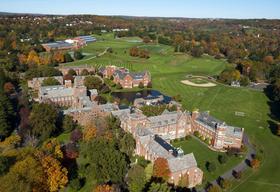
Admissions Overview

This section provides a glimpse into the boarding school admissions process. From how to apply to the 10 things you must not forget, our tips and resources can be a huge benefit to successfully navigating boarding school applications. Find answers to the most common questions, learn when it’s too late to apply and get familiar with the Boarding School Admission Application

View the most popular articles in Admissions Overview:

Can Boarding School Improve College Admission Chances?

Updated
|
Can Boarding School Improve College Admission Chances?
Does boarding school boost college admission chances? Explore 2026 data, outcomes, and real case studies for families considering the path.

For many families, the decision to enroll a student in boarding school is closely tied to long-term academic goals. One of the most common questions is whether attending boarding school can improve college admission chances. While no school can guarantee acceptance to selective colleges, there is growing evidence that boarding school environments can meaningfully shape outcomes.

This article examines the relationship between boarding school attendance and college admissions, using current data, expert insights, and real-world case studies to provide a balanced, evidence-based perspective.

Understanding the College Admissions Landscape in 2026

College admissions remain highly competitive, particularly at selective institutions. According to the National Center for Education Statistics, undergraduate enrollment patterns continue to shift, with selective colleges maintaining low acceptance rates while broadening evaluation criteria beyond grades and test scores. For context, families can review national data trends directly through the NCES:
nces.ed.gov/programs/coe/indicator/cpb

Admissions officers increasingly evaluate:

  • Academic rigor and course selection
  • Extracurricular depth and leadership
  • Personal character and resilience
  • Institutional context and available opportunities

This holistic approach means that a student’s environment, including whether they attend boarding school, can play a meaningful role.

Why Boarding Schools May Influence College Admission Chances

Boarding schools are not inherently “better” than day schools, but they offer structural advantages that can support strong college applications when used effectively.

1. Academic Rigor and Advanced Coursework

Many boarding schools provide extensive advanced coursework, including Advanced Placement (AP), International Baccalaureate (IB), and specialized electives.

Students often benefit from:

  • Small class sizes
  • Faculty with advanced degrees
. . .read more

Best Age to Send a Child to Boarding School

Updated
|
Best Age to Send a Child to Boarding School
Discover the best age to send a child to boarding school, with expert insights on development, readiness, and family considerations.

Choosing the best age to send a child to boarding school is one of the most significant decisions families face when considering this educational path. While boarding schools offer academic rigor, independence, and a structured environment, timing plays a critical role in determining whether a student will thrive.

There is no universal answer. Instead, child development experts, educators, and psychologists point to key developmental stages, emotional readiness, and family dynamics as guiding factors. In 2026, with increasing attention to student well-being and social-emotional learning, schools and families alike are taking a more nuanced approach to this decision.

This article explores the best age to send a child to boarding school, breaking down expert insights by developmental stage and offering practical guidance for parents.

Why Age Matters in Boarding School Readiness

Boarding school is not simply a change of classroom, it is a lifestyle shift. Students must manage academics, social relationships, and personal responsibilities, often without daily parental support.

According to theAmerican Academy of Pediatrics, emotional maturity, resilience, and independence are key indicators of readiness, not just chronological age. Similarly, research from the National Association of Independent Schools emphasizes that successful boarding students demonstrate adaptability and self-regulation.

In other words, the best age to send a child to boarding school depends on whether the student can:

  • Handle separation from home
  • Manage time and responsibilities independently
  • Build and maintain peer relationships
  • Seek help when needed
Developmental Stages and Boarding School Fit

Understanding how children develop

. . .read more

Boarding School Admissions Timeline 2026–2027 Checklist

Updated
|
Boarding School Admissions Timeline 2026–2027 Checklist
Follow this month-by-month boarding school admissions timeline for 2026–2027 to stay organized with visits, tests, applications, and enrollment decisions.

Applying to boarding school requires careful planning, especially for families navigating the process for the first time. The Boarding School Admissions Timeline 2026–2027: Month-by-Month Parent Checklist provides a clear roadmap to help parents and students stay organized throughout the admissions cycle.

Most boarding schools follow a similar admissions calendar. Applications typically open in late summer, interviews and testing occur in the fall and winter, and admissions decisions arrive in early March. Because the process can take nearly a full year, starting early allows families to research schools thoughtfully and avoid last-minute stress.

This month-by-month checklist outlines the key milestones for families preparing to apply for the 2026–2027 academic year.

Understanding the Boarding School Admissions Calendar

Before diving into the timeline, it helps to understand how the boarding school admissions cycle generally works.

Most schools:

  • Accept applications beginning in August or September

  • Require standardized testing such as the SSAT

  • Conduct interviews and campus visits during fall and winter

  • Release admissions decisions on March 10 (commonly called “M10”)

The shared decision date is coordinated through the Enrollment Management Association, which administers the Secondary School Admission Test (SSAT) used by many independent schools.

While the timeline is standardized, individual school deadlines may vary slightly. Always confirm dates directly with each school’s admissions office.

Boarding School Admissions Timeline 2026–2027: Month-by-Month Parent Checklist May–June 2026: Begin Early Research

Late spring and early summer are ideal times to begin exploring boarding school options.

Key tasks include:

  • Discussing goals with

. . .read more

Preparing Students for Boarding School After Summer

Updated
|
Preparing Students for Boarding School After Summer
Expert tips on academic and social readjustment for boarding school students after long summer breaks in 2025.

Preparing Students for Boarding School After Long Summer Gaps: Academic & Social Readjustment Tips

The transition back to boarding school after a long summer break can be both exciting and challenging for students. For many, summer represents unstructured time, family travel, jobs, or relaxation. Returning to the structured academic and social environment of boarding school requires a thoughtful adjustment process. With the 2025 school year underway, parents, educators, and students alike are seeking effective strategies to bridge the gap between summer freedom and the rigor of boarding school life.

This article explores academic and social readjustment tips to help students thrive, ensuring the return to campus is smooth and successful.

Why Summer Gaps Matter

Long summer breaks can significantly affect student readiness for boarding school. Research shows that students lose between one to three months of academic progress during summer—commonly referred to as the “summer slide.” According to the National Summer Learning Association, learning loss is most noticeable in math and reading. In addition, time away from peers and structured routines can make reentering the social environment of a boarding school more daunting.

Boarding school students often face:

  • Academic challenges: Reacclimating to advanced coursework, homework schedules, and test preparation.

  • Social challenges: Rebuilding friendships, adjusting to dorm life, and reestablishing routines.

  • Emotional challenges: Homesickness after being with family for an extended time, or

. . .read more

Boarding School Admissions for International Students, 2025

Updated
|
Boarding School Admissions for International Students, 2025
A 2025 guide for international families on U.S. boarding school admissions, tuition, visas, and trends shaping student success.

Boarding School Admissions: International Students (2025 Update)

For decades, U.S. boarding schools have attracted international families seeking rigorous academics, diverse communities, and pathways to top universities. In 2025, the appeal remains strong, but the admissions landscape is shifting. Rising tuition, evolving visa rules, and changing student demographics require families to be more informed than ever. This guide outlines what international parents need to know about boarding school admissions today.

Why Choose a U.S. Boarding School?

International students attend American boarding schools not only for advanced courses and college preparation but also for the life skills gained in a residential setting. These schools emphasize independence, maturity, and resilience.

Graduates consistently report that living away from home before college helped them transition more smoothly to university life. “Students coming from boarding schools are often more adaptable and confident in new settings,” notes one admissions director at a New England boarding school.

Enrollment Trends: A More Global Mix

International students make up roughly 15% of independent school enrollment nationwide. Boarding schools mirror this trend, with steady interest despite global challenges.

Recent data reveal important shifts:

  • India on the rise: Enrollment from India has surged in recent years, making Indian students one of the fastest-growing international cohorts.

  • China declining: Once the largest source of boarding students, China’s representation has dropped as families weigh other global options.

  • Broader diversity: Schools are welcoming more students from Canada, Mexico, Africa, and Europe, contributing to richer cultural exchange on campuses.

Visa arrivals, however, remain a

. . .read more

Recent Articles

Special Needs Boarding Schools: A 2026 Parent Guide
Explore special needs boarding schools in 2026, including programs, costs, benefits, and how to choose the right fit for your child.
Religious Boarding Schools: A 2026 Parent Guide
Explore religious boarding schools, faith-based education models, benefits, and how to choose the right fit in this updated 2026 guide.
Religious vs Secular Boarding Schools: How to Choose
Compare religious vs secular boarding schools, including academics, culture, and student life, to choose the right environment in 2026.