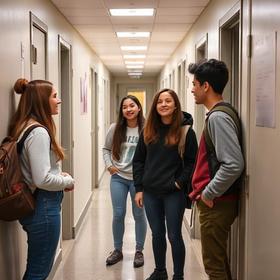
Evaluating Schools

Here we’ll provide you with information on evaluating boarding schools. From comparing schools to identifying language and sports programs, our articles will help you make an informed decision. Learn the best approach to compare schools, get tips on creating a spreadsheet, and determine where to find the data.

View the most popular articles in Evaluating Schools:

Religious vs Secular Boarding Schools: How to Choose

Updated
|
Religious vs Secular Boarding Schools: How to Choose
Compare religious vs secular boarding schools, including academics, culture, and student life, to choose the right environment in 2026.

Choosing a boarding school is one of the most consequential decisions families make during a student’s academic journey. Among the many factors to weigh, the distinction between religious vs secular boarding schools stands out as particularly influential. The educational philosophy, campus culture, and daily routines can vary significantly depending on whether a school is faith-based or non-religious.

In 2026, as boarding schools continue to evolve in response to changing societal values, families are increasingly focused on finding environments that align not only with academic goals but also with personal beliefs and lifestyle preferences. This guide offers a comprehensive comparison to help parents and students determine which setting best supports their needs.

Understanding Religious Boarding Schools

Religious boarding schools integrate faith-based principles into their academic and residential life. These schools may be affiliated with specific denominations, such as Catholic, Episcopal, Jewish, or Islamic traditions, or they may take a broader spiritual approach.

Key Characteristics
  • Faith-centered curriculum: Students often take theology or religious studies courses alongside traditional academics.
  • Regular worship or observance: Attendance at services, prayer sessions, or spiritual gatherings may be required or strongly encouraged.
  • Values-based education: Emphasis on moral development, community service, and ethical leadership.
  • Structured environment: Clear expectations around behavior, often rooted in religious teachings.

Many religious boarding schools are known for their strong sense of community and shared values. According to the National Center for Education Statistics, private schools, including religious institutions, often report smaller class sizes and higher levels of parental satisfaction nces.ed.gov.

Potential
. . .read more

Boarding School Rankings Explained in 2026

Updated
|
Boarding School Rankings Explained in 2026
Learn how boarding school rankings work in 2026, what they measure, and how to evaluate schools beyond rankings for the best fit.

For many families beginning their search, boarding school rankings appear to offer a clear shortcut to identifying the “best” schools. Lists circulate widely online, often emphasizing prestige, college placement rates, or selectivity. Yet rankings alone rarely tell the full story.

Understanding how boarding school rankings are created, what they measure, and what they leave out is essential for making an informed decision. In 2026, as education becomes more personalized and outcomes-driven, evaluating boarding schools requires a deeper lens than rankings alone.

This guide explains how boarding school rankings work and how families can use them effectively, without relying on them too heavily.

What Are Boarding School Rankings?

Boarding school rankings are comparative lists that attempt to evaluate schools based on selected criteria. These lists are typically compiled by media outlets, education platforms, or independent organizations.

Unlike colleges, however, there is no universally accepted ranking system for boarding schools. Each publisher uses its own methodology, which can lead to significantly different results.

Common ranking factors include:

  • Academic performance and rigor
  • College matriculation outcomes
  • Faculty credentials
  • Student-to-teacher ratios
  • Campus facilities
  • Extracurricular offerings
  • Reputation surveys

Because methodologies vary, the same school may appear highly ranked on one list and lower on another.

How Boarding School Rankings Are Calculated

Most ranking systems rely on a combination of quantitative data and subjective inputs. Understanding these components helps clarify what rankings actually reflect.

1. Academic Metrics

Academic strength is often the most heavily weighted factor. This may include:

  • Standardized test scores (SSAT, SAT,
. . .read more

Famous Boarding School Alumni and What They Teach Parents (2026 Update)

Updated
|
Famous Boarding School Alumni and What They Teach Parents (2026 Update)
Updated 2026 guide to notable boarding school alumni, trends in costs and enrollment, and what families should know when planning for boarding school.

Famous Boarding School Alumni and What They Teach Parents

Boarding schools have shaped generations of leaders, innovators, artists and global citizens. For many parents considering this path in 2026, understanding not only the legacy of boarding school alumni but also the current realities of cost, enrollment trends, application cycles and student support matters deeply. This updated article illuminates both the accomplishments of notable boarding school graduates and the practical planning insights families need today.

Why Alumni Matter to Parents
Notable alumni often exemplify the holistic development boarding schools promote: rigorous academics, personal resilience, community engagement and leadership. Alumni achievements can help parents gauge the long-term value of the boarding experience and how schools nurture talent across disciplines. Many boarding schools cultivate alumni networks that support current students with mentorship, internships and college guidance, extending benefits beyond graduation. The success of such networks is frequently a point of emphasis in admissions materials and school visits.

Examples of Notable Alumni
Boarding school alumni appear across fields from politics and business to arts and sciences. Prestigious boarding institutions have produced world leaders, entrepreneurs and cultural figures who illustrate the range of paths a boarding education can support:

  • Phillips Exeter Academy alumni include Facebook founder Mark Zuckerberg, U.S. President Franklin Pierce and numerous public officials, Nobel laureates and business leaders, reflecting deep academic and leadership preparation.

  • Across the broader boarding school landscape, actors and artists such as Steve Carell and

. . .read more

Boarding School Myths 2025: What Parents Should Know

Updated
|
Boarding School Myths 2025: What Parents Should Know
Discover the truth behind common boarding school myths for 2025—debunking misconceptions and helping parents make informed choices.

Boarding School Myths Parents Still Believe (and the Truth)

Deciding whether a boarding school is the right choice for your child remains a significant decision in 2025. Yet many misconceptions persist about what boarding school life looks like, how it impacts students, and who attends it. In this article, we address the most common myths parents still believe, present the current evidence, and offer guidance on what modern boarding schools actually offer.

Myth 1: Boarding Schools Are Only for Troubled Teens

The myth: Boarding schools are places where problem-children are sent.
The truth: Many boarding schools today are college-preparatory environments, not behavioural correction centres. For example, one institution explains: “Our students come from diverse backgrounds and are motivated individuals who seek a well-rounded education” rather than simply “kids in trouble.” St. John's Northwestern

Why the myth persists: Popular culture, older generations’ experiences and the conflation of therapeutic and traditional boarding schools fuel this misconception.

What to look for:

  • Admissions materials that emphasise academic, athletic, character development rather than behavioural remediation.

  • Student body profiles: whether many students are first-time boarders, transfer students, or those seeking structure.

  • Support services for students with learning differences—not simply “behavioural problems”.

Myth 2: Boarding School Means Wealthy Families Only

The myth: If you send your child to a boarding school, they must come from a very

. . .read more

Boarding School Academics vs. Public School Honors Programs

Updated
|
Boarding School Academics vs. Public School Honors Programs
A detailed comparison of boarding school academics and public school honors programs, exploring structure, outcomes, cost, and fit in 2025.

Introduction

Choosing between a full-residential boarding school academic path and a public school honors program is a significant decision for families and students. In 2025, both options offer compelling advantages, but they differ in structure, culture, and purpose. This article examines how boarding school academics compare with public school honors programs—highlighting key differences, benefits, potential drawbacks, and guidance for parents, students, and educators.

Defining the Options

Boarding School Academics

When we refer to “boarding school academics,” we mean the full educational environment provided by a residential institution where students live on campus and are immersed in a structured academic and extracurricular setting day and night. Boarding schools often offer smaller class sizes, dedicated faculty mentors, living-learning communities, and around-the-clock support. For example, one overview of boarding education notes that students in such settings “learn to self-manage under supervision” and benefit from “an immersive education” in which teachers and peers are readily accessible.

Public School Honors Programs

A public school honors program typically exists within a non-residential public school district, offering advanced coursework, accelerated pace, and enrichment beyond standard classes. Honors programs may include honors versions of core subjects, AP/IB or dual-credit options. A profile of honors in K-12 describes how “honors classes address the same standards but go deeper into the content, at a much faster pace” and require higher expectations.

Structure and Academic Rigour

Curriculum and Pace

. . .read more

Recent Articles

Special Needs Boarding Schools: A 2026 Parent Guide
Explore special needs boarding schools in 2026, including programs, costs, benefits, and how to choose the right fit for your child.
Religious Boarding Schools: A 2026 Parent Guide
Explore religious boarding schools, faith-based education models, benefits, and how to choose the right fit in this updated 2026 guide.
Religious vs Secular Boarding Schools: How to Choose
Compare religious vs secular boarding schools, including academics, culture, and student life, to choose the right environment in 2026.